
A year on Earth is 365.25 days — the time it takes our planet to complete one full orbit around the Sun. But every planet in our solar system travels a different path at a different speed. Your age, measured in planetary years, varies wildly depending on which world you're standing on. A 30-year-old on Earth would barely be a toddler by Jupiter's calendar, and would have racked up nearly 125 birthdays on Mercury.
What Is a Planetary Year?
A planetary year — also called an orbital period — is the time a planet takes to travel once around the Sun. This depends on two things: how far the planet is from the Sun, and how fast it moves in its orbit. Planets closer to the Sun are tugged more strongly by gravity, so they zip around in a shorter time. Planets farther away travel a much longer path at a more leisurely pace. Johannes Kepler described this mathematically in 1619: the square of a planet's orbital period is proportional to the cube of its average distance from the Sun.
How Planetary Years Were Measured Historically
Ancient astronomers tracked planetary motion long before telescopes existed. The Babylonians kept meticulous records of Jupiter's position over centuries and could predict its movement with surprising accuracy. Greek astronomers including Hipparchus and Ptolemy used these observations to build geometric models of planetary motion. It was not until Copernicus placed the Sun at the center (1543), Tycho Brahe made precise naked-eye observations, and Kepler derived his three laws (1609-1619) that humanity gained reliable values for planetary orbital periods. Modern measurements use radar ranging, spacecraft telemetry, and precise timing of transits to pin down orbital periods to fractions of a second.
Planetary Year Lengths at a Glance
- Mercury: 88 Earth days — you would be nearly 4.5 times older in Mercurian years
- Venus: 225 Earth days — about 1.6 times older
- Mars: 687 Earth days — you would be roughly half your Earth age
- Jupiter: 4,333 Earth days (11.86 Earth years) — a 30-year-old would be just 2.5 Jovian years old
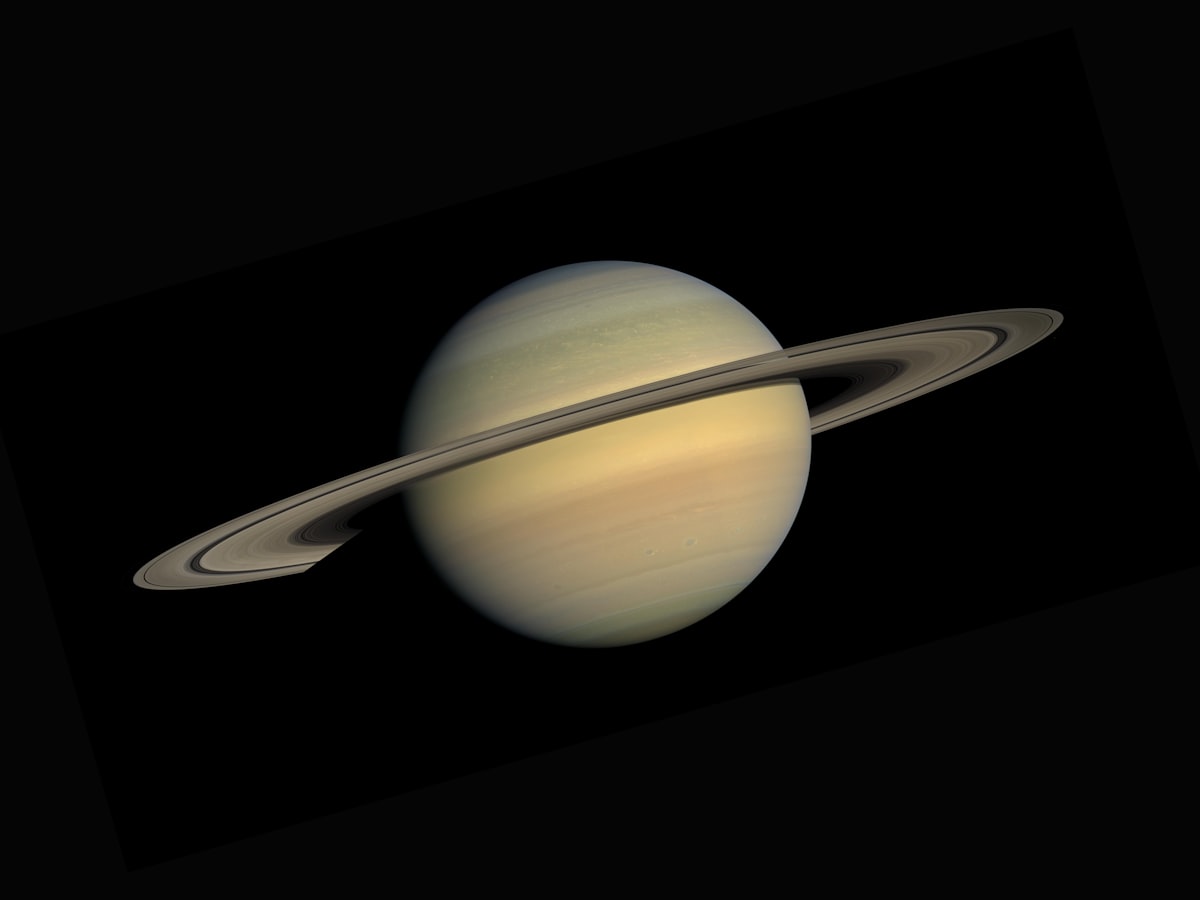
- Saturn: 10,759 Earth days (29.46 Earth years) — most adults have not completed a single Saturnian year
- Uranus: 30,589 Earth days (83.7 Earth years) — fewer than half of all humans live to see their first Uranian birthday
- Neptune: 59,800 Earth days (163.8 Earth years) — no human has ever lived long enough to complete one Neptunian year
- Pluto: 90,560 Earth days (248 Earth years) — has not completed a single orbit since its discovery in 1930
How to Calculate Your Planetary Age
The calculation is straightforward. First, convert your Earth age into days by multiplying years by 365.25. Then divide by the planet's orbital period in Earth days. A 30-year-old has lived approximately 10,958 days. On Mars (687-day year): 10,958 divided by 687 equals roughly 15.9 Martian years. On Jupiter (4,333-day year): 10,958 divided by 4,333 equals roughly 2.5 Jovian years. On Saturn (10,759-day year): 10,958 divided by 10,759 equals roughly 1.02 — meaning a 30-year-old has just barely completed their first Saturnian year.
Solar Day vs Orbital Year: A Crucial Distinction
The orbital year is not the same as the length of a day on that planet. A day is how long it takes a planet to rotate once on its axis, while a year is how long it takes to orbit the Sun. Venus rotates so slowly that a single Venusian day (243 Earth days) is longer than a Venusian year (225 Earth days) — on Venus, the Sun rises in the west and sets in the east. Mercury rotates three times for every two orbits, giving it three days for every two years. Understanding this distinction matters for any serious discussion of how time would be experienced on another world.
The Inner Planets: Fast Years on Mercury and Venus
On Mercury, your birthday would come around every 88 Earth days. A child who turns 10 on Earth would have celebrated their 41st Mercurian birthday. Mercury's extreme environment — surface temperatures swinging from minus 180 degrees Celsius at night to 430 degrees by day — makes it deeply inhospitable. Venus offers a year of 225 days but a surface temperature of 465 degrees Celsius and crushing atmospheric pressure 92 times that of Earth. The concept of aging on these worlds is purely hypothetical, but the math illuminates how differently orbital mechanics can play out even among neighboring planets.
Mars and the Future of Human Age
Mars is the planet most seriously considered for human habitation. A Martian year lasts about 687 Earth days — roughly 1.88 Earth years. NASA and private organizations like SpaceX are planning crewed Mars missions that could see astronauts living on Mars for 500 days or more. Mars has its own seasons, similar in structure to Earth's but nearly twice as long, with northern spring lasting about 194 Earth days. Future Martian colonists may eventually develop a Martian calendar, and children born on Mars would experience their first Martian birthday around 23 months by Earth reckoning.
If humans ever colonize Mars, birthdays would come around only every 687 Earth days — roughly once every 22 months by Earth's calendar.
The Outer Planets: Ages No Human Has Completed
Saturn completes an orbit in 29.46 Earth years, meaning most healthy adults will live to complete two or three Saturnian years. Uranus takes 84 Earth years — a full human lifetime — and only a small fraction of people survive to their first Uranian birthday. Neptune's 164.8-year orbit is entirely beyond any human lifespan. Neptune was discovered in 1846 and completed its first full orbit since discovery in 2011. No living person has ever completed a single Neptunian year, and none ever will under current life expectancy.
Pluto and Exoplanets: The Extremes of Planetary Time
Pluto's year spans 248 Earth years. Discovered on February 18, 1930, it will not return to the same position in its orbit until 2178. At the other extreme, astronomers have found exoplanets with extraordinarily short years. WASP-12b completes an orbit in about 1.09 Earth days, meaning an annual birthday would arrive daily. On such worlds — tidally locked and blasted by stellar radiation — the concept of a year as a unit of life loses all meaning.
Time Dilation: Einstein's Take on Planetary Age
Albert Einstein's General Theory of Relativity adds another dimension to planetary age. Time does not pass at the same rate everywhere — it is affected by both velocity and gravitational field strength. A clock on Jupiter, where gravity is 2.4 times stronger than Earth's, would tick slightly slower than one on Earth. Astronauts on the International Space Station age about 0.007 seconds less per six-month mission due to relativistic time dilation at orbital speed. These effects are tiny within our solar system but become dramatic near neutron stars or black holes. In the most rigorous physical sense, age depends on where and how fast you have been traveling through spacetime.
The Psychology of Aging on Different Timescales
There is a psychological dimension to planetary age beyond the mathematics. Human life milestones — childhood, adolescence, adulthood, old age — are calibrated to an Earth year. Imagined on a Jovian timescale, childhood might last the equivalent of decades. Researchers studying long-duration spaceflight have found that astronauts develop a different relationship with time when isolated from Earth's 24-hour cycle. Future deep-space explorers will need entirely new psychological frameworks for understanding their place in time, uncoupled from the orbital rhythm of the planet they no longer inhabit.
Celestial Mechanics: The Science Behind the Numbers
The orbital periods of planets follow from Newton's law of universal gravitation combined with Kepler's third law: the orbital period squared is proportional to the semi-major axis cubed. Doubling your distance from the Sun does not double your year — it increases it by a factor of roughly 2.83. This is why the outer solar system is home to such slow-moving objects: everything beyond the asteroid belt is locked in very long orbits, and the same equations governing how old you would be on Mars also govern spacecraft trajectories and exoplanet discovery.
Why It Matters Beyond Fun Facts
Planetary age calculations have real applications in astronomy and space mission planning. Launch windows, planetary alignments, communication delays, and orbital insertion burns all depend on knowing exactly where each planet is in its orbit at any moment. Understanding planetary years builds intuition for the scale of the solar system and reinforces a key physical insight: time itself is defined by motion through space. Whether these numbers are humbling, inspiring, or just entertaining, they are a direct window into the mechanics that govern our universe.
Calculate how old you'd be on every planet with our free Planet Age Calculator →