
Age milestones are universal — every culture marks certain ages as significant, investing them with ceremony, legal weight, and symbolic meaning. But which ages matter, and how they are celebrated, varies enormously across time and geography. A 15-year-old girl in Mexico City, a 13-year-old boy in Jerusalem, a 60-year-old man in Tokyo, and a toddler in Lagos all experience entirely different age rituals that reflect distinct cultural priorities, spiritual beliefs, and social structures.
Ancient Birthday Traditions
Birthdays have been marked for far longer than most people realise. Ancient Egyptians recorded the birthdays of pharaohs as divine events. Ancient Greeks made round offerings of cake and lit candles to honour Artemis, the moon goddess, on celebratory occasions. Roman citizens officially recorded their birthdays in civic documents, and birthday feasts for prominent men were noted by historians. However, for ordinary people in the ancient world, birthdays were rarely celebrated: record-keeping was imprecise, calendars varied by region, and the modern concept of an individual birthday as a personal milestone did not yet exist in the way we understand it today.
Why Many Early Cultures Avoided Birthday Celebrations
In many pre-modern cultures, birthdays were viewed with suspicion rather than celebration. A widespread belief held that a person's birthday made them unusually vulnerable to evil spirits — the transition into a new year of life was a moment of spiritual weakness. Noise, candles, and the gathering of friends and family were protective rituals designed to ward off malevolent forces, not simply to celebrate. Several religious traditions historically discouraged birthday celebrations: early Christians viewed birthday revelry as a pagan practice, and some religious communities today — including Jehovah's Witnesses and certain Islamic scholars — continue to discourage formal birthday observance.
The Birthday Cake and Candles Tradition
The modern birthday cake tradition appears to have emerged in eighteenth-century Germany, where a cake called Geburtstagskuchen was baked for children's birthdays and candles were lit — one for each year of life, plus one for the year to come. The practice spread through Europe and North America during the nineteenth century as industrialisation made sugar and refined flour more affordable. Blowing out the candles in one breath and making a wish before they are extinguished is an English-language tradition whose exact origins are disputed, but which was well established by the early twentieth century.
The Story of Happy Birthday to You
Happy Birthday to You is one of the most performed songs in the English language. It originated as Good Morning to All, written by American sisters Mildred and Patty Hill in 1893 for kindergarten students. The Happy Birthday lyrics emerged later in the nineteenth century and were eventually published commercially. The Clayton F. Summy Company registered a copyright in 1935, leading to decades of licensing fees for commercial use. In 2015 and 2016, US federal courts ruled that the copyright was invalid, placing the song firmly in the public domain — resolving a legal controversy that had lasted eighty years.
Japan: The Kanreki at 60
In Japanese tradition, the 60th birthday — Kanreki — marks the completion of one full cycle of the Chinese zodiac calendar, which combines 12 animal years with 5 elemental phases to produce a 60-year cycle. The celebrant traditionally wears a red vest or jacket symbolising rebirth and a return to childhood. The ceremony was historically understood as a person completing their first full human cycle and beginning life anew, free from the obligations of middle age. Japan also observes Kiju at 77, Sanju at 80, Hakuju at 99, and other milestone birthdays, each with its own name and associated colour.
Latin America: The Quinceañera at 15
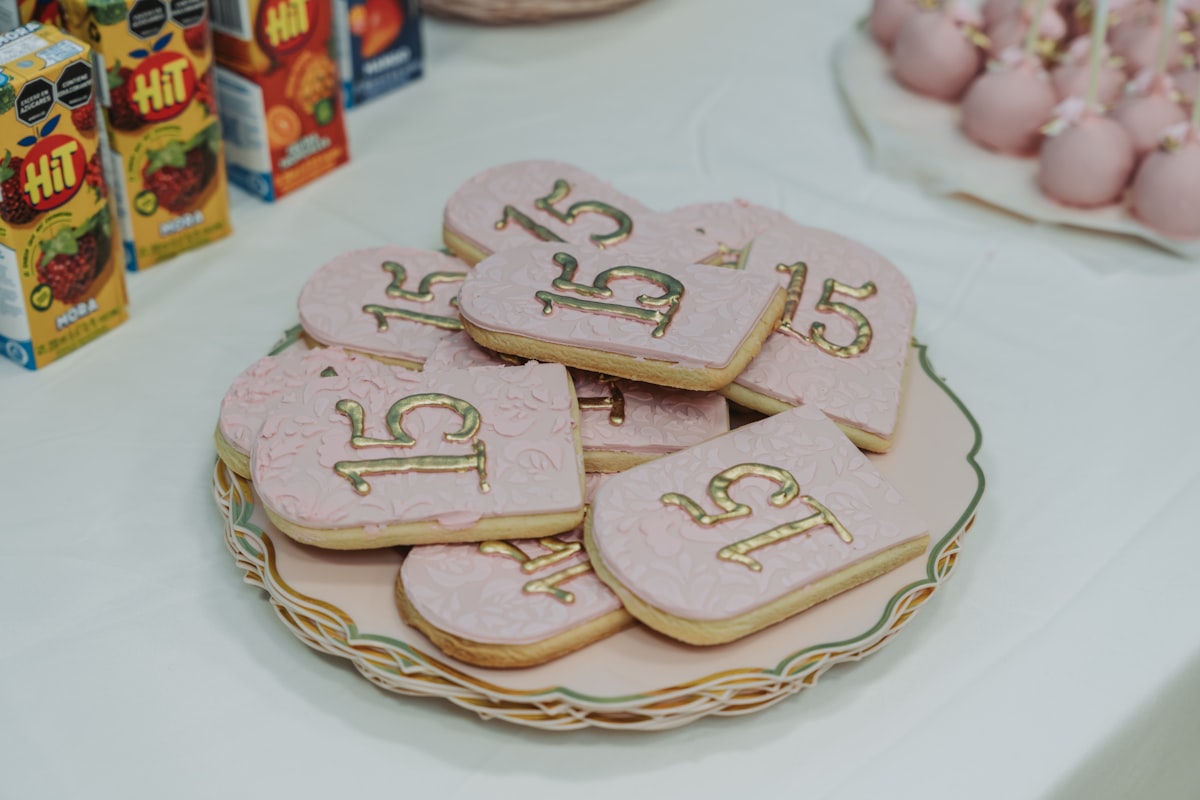
The quinceañera marks a young woman's 15th birthday throughout Latin America and Hispanic communities worldwide. It celebrates her transition from girlhood to womanhood, typically involving a Catholic Mass, a formal tiara ceremony, a court of honour composed of friends and family, and an elaborate party with dancing. The tradition blends pre-Columbian Aztec coming-of-age rituals with Spanish Catholic customs introduced during colonisation. In Mexico, the quinceañera is often as significant as a wedding in terms of family investment and social ceremony.
Jewish Tradition: Bar and Bat Mitzvah
In Jewish tradition, a boy becomes Bar Mitzvah at 13 and a girl becomes Bat Mitzvah at 12 in Orthodox communities or 13 in many Conservative and Reform communities. The ceremony marks religious adulthood — the age at which the individual takes personal responsibility for observing Jewish law and can be counted in a minyan, the quorum required for certain prayers. The Torah reading by the young person is central to the service, typically requiring months of preparation. The modern celebration following the service, ranging from a simple family meal to an elaborate reception, is a more recent cultural addition that varies widely by community.
Indian and Hindu Birthday Traditions
In Hindu tradition, a person's birth is mapped to a specific nakshatra — one of 27 or 28 lunar mansions in the Vedic astrological system. The birthday is traditionally celebrated not on the solar calendar date but on the day when the moon returns to the same nakshatra each year, which may fall on a different date each year. Special puja ceremonies and offerings to deities associated with the person's birth star are performed. In many South Indian households, the first birthday is an especially significant occasion involving the shaving of the baby's head and blessings from elders.
Nigerian Naming Ceremonies and Early Milestones
In Yoruba tradition in Nigeria and across much of West Africa, the eighth day after birth is observed as the naming ceremony — a community gathering at which the child is formally given their name and introduced to the world. Among the Igbo people, the naming ceremony traditionally falls on the fourth day for girls and the eighth day for boys. These early naming milestones are understood as the moment the child becomes a full member of the community and their individual identity is publicly acknowledged. First birthdays, seventh birthdays, and the transition to puberty all carry varying ceremonial significance across West African ethnic groups.
South Korea: Everyone Gets Older on New Year
Korea traditionally uses an age-counting system in which a person is considered one year old at birth and gains another year on January 1 of each year rather than on their individual birthday. Under this system, a baby born on December 31 becomes two years old the next day. South Korea officially moved to international age counting for legal and administrative purposes in 2023, but the traditional system — called Korean age — remains deeply embedded in everyday conversation, especially among older generations.
Western Sweet 16 and Debutante Traditions
In the United States, the 16th birthday has taken on particular cultural significance through the sweet sixteen celebration. While not tied to religious or civic milestones, the sweet sixteen party became a cultural institution through the twentieth century, amplified by television programmes and social media. The debutante tradition — in which a young woman is formally presented to society, typically around age 17 to 18 — has its roots in European aristocratic coming-out balls. It persists in modified form across the American South, in parts of Europe, and in countries including Australia and Brazil, where it intersects with the quinceañera tradition at slightly older ages.
Western 'Big 0' Birthdays
In Western cultures, round-number birthdays — 30, 40, 50, 60 — receive special social attention. The 21st birthday is particularly significant in the United States and historically in the United Kingdom as the traditional age of full legal adulthood, though 18 is now the legal threshold in most of Europe. The 100th birthday is marked by a personal message from the monarch in the United Kingdom, a tradition begun by King George V in 1917. Australia, Canada, and several other Commonwealth nations have similar traditions of royal greetings for centenarians.
Milestone Birthdays and Mental Health
Research in psychology documents a phenomenon sometimes called birthday depression: a temporary dip in mood experienced by many adults around a significant birthday, particularly the milestone decade birthdays of 30, 40, 50, and 60. The effect is attributed to the evaluation process that milestone ages trigger — a comparison between where one is and where one expected to be. Studies have found that hospitalisation rates for mental health concerns are modestly elevated in the week of a birthday. Understanding this vulnerability allows friends, family, and healthcare providers to offer more proactive support around significant milestones.
How Social Media Has Changed Birthday Culture
Social media platforms, particularly Facebook's birthday notifications, have transformed the social dynamics of birthdays over the past two decades. For many people, birthdays now generate a stream of messages from casual acquaintances, former colleagues, and distant relatives who would never previously have acknowledged the occasion. Research on the psychological impact of these digital birthday greetings is mixed: receiving many messages can feel affirming, but the predominantly superficial nature of social-media birthday acknowledgements can also heighten feelings of loneliness in those who crave deeper connection. The performative aspect of birthday celebrations has intensified on Instagram and TikTok, where elaborate birthday tributes have become a form of social currency.
Age milestones carry different weight in different cultures, but the impulse to mark time and celebrate survival is universal. Wherever you are in the world, the number you carry has meaning.
Find out exactly how old you are — in years, months, and days — with our Age Calculator →