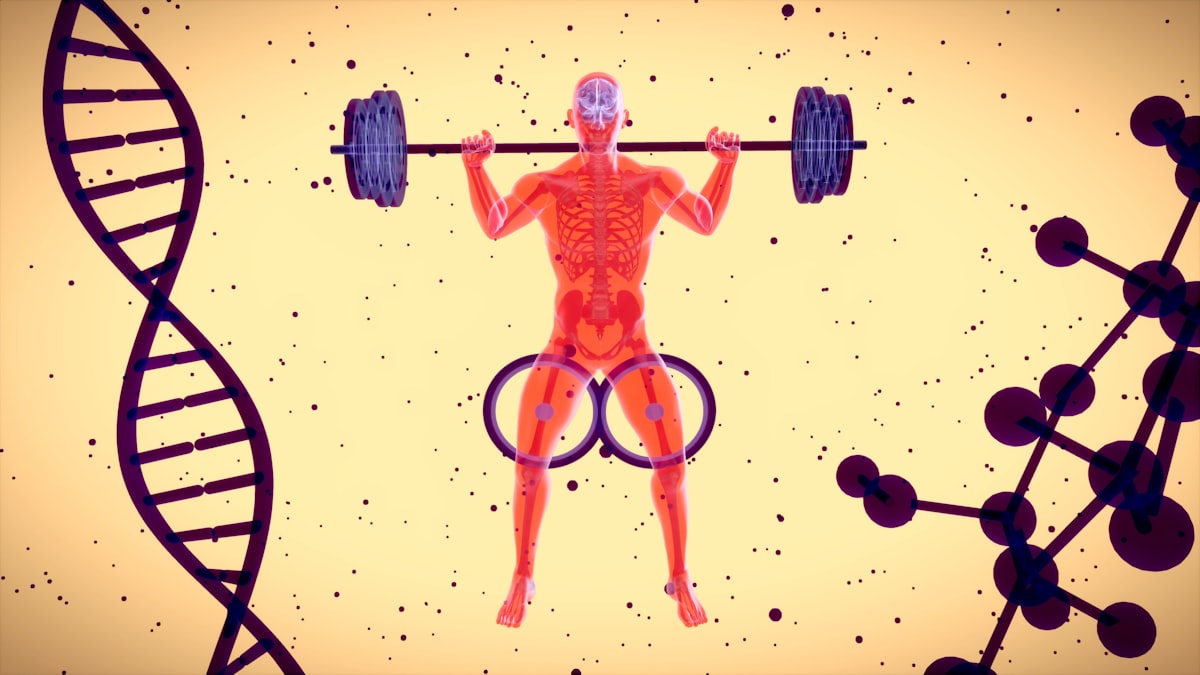

The body changes continuously throughout life, but certain shifts tend to cluster in specific decades. Some are dramatic and visible — puberty, menopause, the first grey hairs. Others are quiet and gradual — a slight slowing of the metabolism, hearing frequencies that fade by increments, the brain's processing speed ratcheting down imperceptibly year by year. Understanding what to expect — and critically, what is modifiable — helps you make far better health decisions at every stage of life.
The Teen Years: Puberty and Body Composition Transformation
Puberty triggers the most dramatic physical transformation most humans ever experience outside of infancy. In girls, it typically begins between ages 8 and 13 with a rapid growth spurt, breast development, widening hips, and the redistribution of fat toward the hips and thighs driven by rising estrogen. In boys, it starts a few years later — typically between 9 and 14 — with growth spurts, voice changes, dramatic muscle mass increases driven by testosterone surges, and broader shoulders. Body fat percentage in adolescent boys can drop substantially during this period even without any change in diet or exercise, simply because testosterone-driven muscle growth outpaces fat accumulation.
The teen years also establish habits and body composition setpoints that echo for decades. Research consistently shows that physical activity during adolescence predicts physical activity in adulthood, and that obesity established in the teenage years is significantly harder to reverse than obesity that begins in the 30s or 40s. The teen brain is simultaneously highly plastic — capable of building powerful fitness habits — and highly sensitive to social influences that can undermine healthy behaviors.
Your 20s: Peak Physical Capacity
Most physical systems reach their lifetime peak in the 20s. Muscle mass, bone density, lung capacity, cardiovascular efficiency, reaction time, and immune response are all near their maximum. Recovery from injury is fastest. The brain reaches its full adult volume around age 25, and the prefrontal cortex — responsible for judgment, impulse control, and long-term planning — completes its development around the same time, which helps explain certain risk-taking patterns earlier in the decade.
Bone density peaks in the late 20s, typically between ages 25 and 30. The amount of bone mass you accumulate during this window largely determines your lifelong fracture risk. Weight-bearing exercise, adequate calcium (around 1000 mg daily), and sufficient vitamin D during your 20s are the most powerful levers you have for building the bone density that will protect you in your 60s and 70s. Most people do not think about bone health until they have lost it.
Your 30s: The Gradual Shift Begins
Muscle mass begins declining at approximately 0.5 to 1 percent per year after age 30 without resistance training — a process called sarcopenia. Metabolism slows modestly, partly because metabolically active muscle tissue is diminishing. Recovery from intense exercise takes slightly longer. Hormonal changes begin their slow arc: testosterone in men starts declining around 1 to 2 percent per year from the mid-30s; estrogen patterns begin shifting for women approaching 40.
Skin collagen production starts declining in the 30s at roughly 1 percent per year, contributing to the gradual appearance of fine lines and reduced skin elasticity. Hearing loss, often unnoticed at first, can begin in the 30s for many people — particularly those with histories of loud noise exposure. The cardiovascular system remains robust, but arterial walls begin a slow process of stiffening that will compound over the following decades if lifestyle factors are not managed.
Your 40s: Compounding Changes
The 40s are when many gradual changes become noticeable to individuals who have not been tracking them. Metabolic slowdown accelerates slightly. Many people notice weight gain despite eating the same amounts as in their 30s — this reflects both the reduced metabolic rate and the loss of muscle tissue that burns calories at rest. Presbyopia, the loss of the lens's ability to focus on close objects, typically appears between ages 40 and 45, making reading glasses a common new purchase.
Cardiovascular risk begins rising meaningfully in the 40s. Blood pressure tends to creep upward, LDL cholesterol may increase, and the risk of coronary artery disease begins accumulating the consequences of decades of lifestyle choices. This decade rewards proactive monitoring: blood pressure, cholesterol, fasting blood glucose, and waist circumference together tell a far more complete story than weight or BMI alone.
Your 50s: Hormonal Transitions
Menopause occurs for most women between ages 45 and 55, with the average onset at 51 in Western populations. The steep decline in estrogen that accompanies menopause has far-reaching consequences: fat redistributes from the hips and thighs toward the abdomen, bone density loss accelerates (women can lose 3 to 5 percent of bone mass per year in the first five years after menopause), and cardiovascular risk rises substantially. The hot flashes and sleep disruptions that many women experience during this transition compound fatigue and stress, creating additional metabolic pressure.
For men in their 50s, testosterone continues its gradual decline, and for a subset of men the drop is significant enough to cause fatigue, reduced libido, reduced muscle mass, and mood changes — a cluster sometimes called andropause or late-onset hypogonadism, though it is less universal and dramatic than female menopause. Both sexes benefit from increased calcium and vitamin D intake, continued resistance training, and more rigorous cardiovascular screening in this decade.
Respiratory and Immune System Changes
Lung capacity declines gradually from the mid-20s onward, with forced expiratory volume (FEV1) decreasing by approximately 1 percent per year from around age 25. For non-smokers, this decline is slow enough to be clinically irrelevant until very old age. For smokers, the rate is 2 to 3 times faster, which is why long-term smokers develop breathlessness and COPD symptoms decades before non-smokers. By their 60s, smokers can have the lung age of a non-smoker in their 80s. The immune system undergoes gradual decline through a process called immunosenescence — the production of naive T-cells decreases, inflammatory baseline rises ('inflammaging'), and vaccine responses become less robust with age.
Hearing and Vision Changes by Decade
Age-related hearing loss (presbycusis) typically begins in the high frequencies — sounds above 4,000 Hz — in the 30s and 40s, often before it is subjectively noticed. By age 65, roughly one in three people has measurable hearing loss; by 75, it affects nearly half of all adults. Vision changes follow a predictable timeline: presbyopia in the 40s, increasing risk of cataracts in the 60s, and growing risk of age-related macular degeneration after 70. Glaucoma risk increases progressively after 60. Many of these changes are modifiable — UV-blocking sunglasses reduce cataract and macular degeneration risk, while avoiding loud noise exposure preserves hearing.
Joint Health and Arthritis Risk
Cartilage, the cushioning tissue in joints, does not regenerate effectively in adults. It thins gradually from the 30s onward. Osteoarthritis — the wearing-down of joint cartilage — becomes clinically significant in many people in their 50s and 60s, especially in the knees, hips, and hands. High BMI substantially accelerates knee and hip osteoarthritis by increasing mechanical load. Ironically, regular moderate exercise protects cartilage by stimulating synovial fluid production and maintaining the muscles that support joints — sedentary behavior is actually more damaging to joints long-term than appropriate exercise.
Cognitive Changes: Memory, Processing Speed, and Brain Health
Not all cognitive abilities age at the same rate. Processing speed — how quickly the brain handles information — begins a very gradual decline from the late 20s onward. Working memory starts declining slightly in the 40s. However, crystallized intelligence — vocabulary, knowledge accumulated over time, the ability to apply experience — continues rising into the 60s for most people. The brain is remarkably adaptive: neuroplasticity allows it to form new connections and compensate for age-related losses throughout life. Aerobic exercise is the single intervention most consistently shown to slow cognitive aging, likely through increased cerebral blood flow and BDNF production.
Sleep Architecture Changes with Age
Sleep changes substantially across the lifespan in ways most people do not anticipate. Slow-wave (deep) sleep declines dramatically with age — a 60-year-old gets roughly 80 percent less deep sleep than a 20-year-old. REM sleep also decreases. The circadian clock shifts earlier (advanced sleep phase), which is why many older adults naturally want to sleep and wake earlier. Sleep becomes more fragmented: older adults wake more often during the night and take longer to fall back asleep. These changes in sleep architecture affect memory consolidation, immune function, metabolic health, and cardiovascular recovery — making sleep quality an increasingly important health variable with age.
Your 60s and Beyond: The Importance of Function
From the 60s onward, the focus of health management shifts from performance metrics to functional capacity and independence. Sarcopenia — clinically significant muscle loss — and osteoporosis become the primary physical threats to quality of life. Falls become the leading cause of injury-related death in adults over 65, and the risk rises steeply with each passing decade. Balance training, progressive resistance exercise, and protein-adequate nutrition are the most evidence-backed interventions for maintaining functional independence and reducing fall risk.
How Lifestyle Choices Compound Over Decades
Perhaps the most important insight from aging research is the degree to which lifestyle choices in early decades compound — for better or worse — across later ones. A smoker at 60 has the arterial age of a non-smoker at 75 to 80. A person who has been sedentary throughout their 30s and 40s arrives at 60 with 20 to 30 percent less muscle mass than a physically active peer of the same age. Conversely, people who exercise consistently, maintain a healthy weight, avoid smoking, drink minimally, and sleep well consistently delay the onset of physical and cognitive decline by a decade or more compared to population averages.
Research on Healthy Aging and Centenarians
Studies of centenarians and 'super-agers' — individuals in their 80s and 90s with cognitive and physical capacities typical of people 30 years younger — consistently identify similar clusters of factors: regular physical activity (especially walking), strong social connections, a sense of purpose, plant-forward diets, low stress, and adequate sleep. Genetic factors matter but account for only roughly 25 percent of longevity variation; the remaining 75 percent is attributable to lifestyle and environment. The single most robust predictor of both longevity and health span across virtually all large-scale studies is physical fitness, not BMI, not specific diet, not any supplement.
The changes in each decade are real — but most are significantly modifiable. The research is clear: it is almost never too late to start exercising, improve your diet, or quit smoking. The body responds at every age, even if the pace of improvement is slower in later decades.