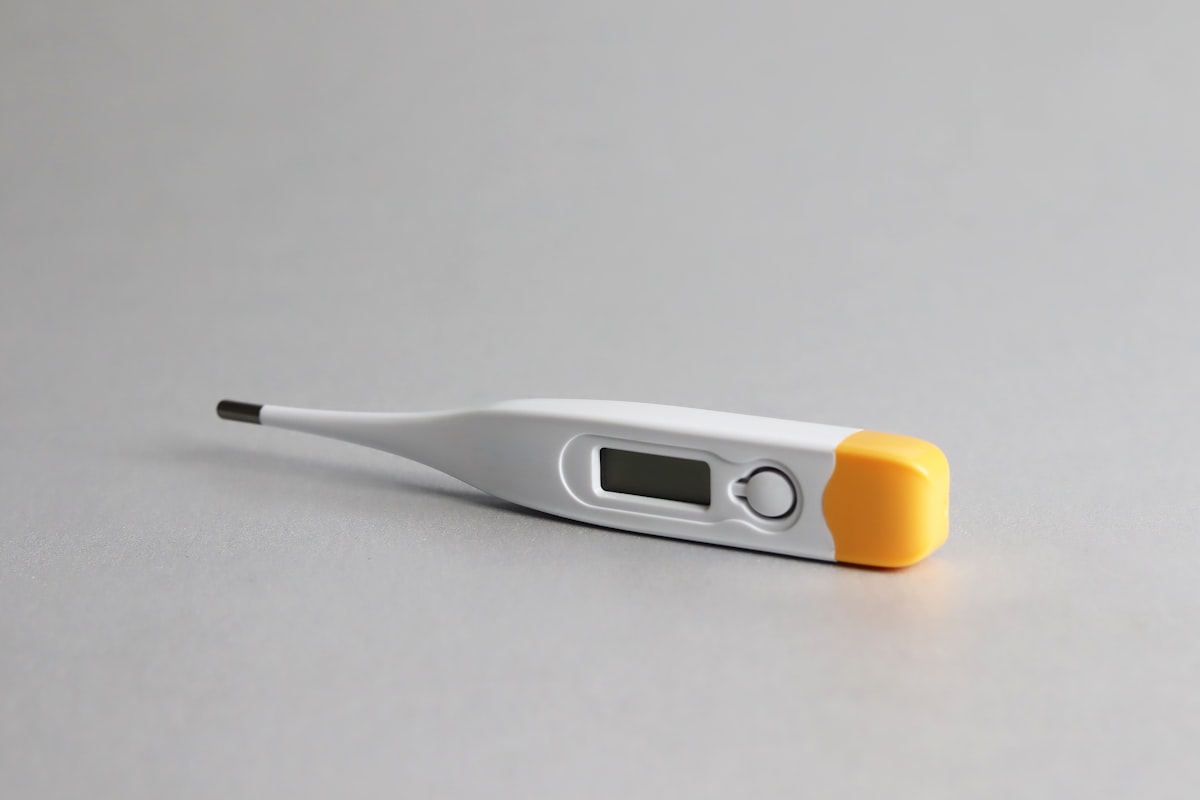

If you have ever looked at an American weather forecast and wondered what 95 degrees Fahrenheit feels like, or tried to follow a US recipe calling for a 350-degree oven, you need the Fahrenheit-to-Celsius conversion. The two scales measure the same physical property — thermal energy — but use completely different reference points and intervals, making direct comparison impossible without arithmetic.
The Formula
Degrees Celsius equals (degrees Fahrenheit minus 32) multiplied by 5/9. Equivalently: degrees C = (degrees F minus 32) divided by 1.8. To convert the other way — Celsius to Fahrenheit — multiply degrees C by 9/5 and add 32. The minus 32 step accounts for the different zero points; the 5/9 or 1.8 factor accounts for the different interval sizes (a Celsius degree is 1.8 times larger than a Fahrenheit degree).
Daniel Fahrenheit and His Scale
Daniel Gabriel Fahrenheit was a German-Polish physicist who built the first accurate mercury thermometers in 1714. His scale used three reference points: 0 degrees was the temperature of a brine solution (water, ice, and ammonium chloride) — the coldest stable temperature he could reliably reproduce; 32 degrees was the temperature of a water-ice mixture; and 96 degrees was approximately human body temperature as measured under the armpit. The 212-degree boiling point of water was a derived consequence of these choices, not an original design goal. Fahrenheit published his scale in 1724 and it was quickly adopted across Europe for scientific work.
Anders Celsius and the Inverted Scale
Anders Celsius, a Swedish astronomer, proposed his scale in 1742 — but with the reference points reversed: 0 degrees for the boiling point of water and 100 degrees for the freezing point. This inverted scale was used for several years until colleagues including Carl Linnaeus reversed it to the familiar form we use today, where 0 is freezing and 100 is boiling. The scale was known as the centigrade scale until 1948, when the International Committee on Weights and Measures officially named it Celsius in his honor.
Worked Examples
- 98.6 degrees F (body temperature): (98.6 minus 32) times 5/9 = 66.6 times 0.556 = 37 degrees C
- 350 degrees F (moderate oven): (350 minus 32) times 5/9 = 318 times 0.556 = 176.7 degrees C
- 72 degrees F (comfortable room): (72 minus 32) times 5/9 = 40 times 0.556 = 22.2 degrees C
- 32 degrees F (freezing point): (32 minus 32) times 5/9 = 0 degrees C
- Minus 40 degrees F = minus 40 degrees C — the one temperature where both scales agree
Mental Math Shortcut
Subtract 30 from Fahrenheit, then halve the result. For 80 degrees F: 80 minus 30 = 50, halved = 25 degrees C (actual: 26.7 degrees C). This approximation is about 1-2 degrees off but is fast enough for weather estimates. For Celsius to Fahrenheit roughly: double the Celsius value and add 30. For 20 degrees C: double is 40, plus 30 = 70 degrees F (actual: 68 degrees F). These shortcuts work best in the range of everyday weather temperatures.
The Kelvin Scale and Absolute Zero
The Kelvin scale is the SI unit of temperature used in science and engineering. It uses the same interval size as Celsius — one kelvin equals one Celsius degree — but starts at absolute zero, the theoretical minimum temperature at which all molecular motion stops. Absolute zero is minus 273.15 degrees Celsius (minus 459.67 degrees Fahrenheit). To convert Celsius to Kelvin, add 273.15. Water freezes at 273.15 K and boils at 373.15 K. The Kelvin scale has no negative temperatures, which makes it essential for thermodynamic calculations involving gases and heat engines.
Body Temperature Nuances
The oft-cited normal body temperature of 98.6 degrees F (37 degrees C) is an average derived from a 19th-century German study of about 25,000 patients by Carl Wunderlich. Modern research shows that normal body temperature varies by age, sex, time of day, and measurement site. Oral temperature averages around 36.6 degrees C (97.9 degrees F) in healthy adults. Rectal temperature runs about 0.3-0.6 degrees C higher. A 2020 Stanford study found that average body temperatures have declined slightly since the 19th century, now averaging about 36.4 degrees C (97.5 degrees F), possibly due to reduced infection rates and inflammation.
Fever Thresholds and When to Seek Care
- Normal range: 36.1-37.2 degrees C (97-99 degrees F)
- Low-grade fever: 37.3-38 degrees C (99.1-100.4 degrees F) — monitor but usually no treatment needed
- Moderate fever: 38-39 degrees C (100.4-102.2 degrees F) — rest, fluids, consider fever reducer
- High fever: 39-40 degrees C (102.2-104 degrees F) — medical evaluation recommended
- Very high fever: above 40 degrees C (104 degrees F) — seek immediate medical attention
- In infants under 3 months: any fever above 38 degrees C (100.4 degrees F) warrants urgent medical care
Cooking Temperature Guide
- Low oven: 150 degrees C = 300 degrees F (meringues, slow-cooked stews)
- Moderate oven: 175-180 degrees C = 350 degrees F (cakes, cookies, chicken)
- Hot oven: 200-220 degrees C = 400-425 degrees F (roast vegetables, pizza, bread)
- Very hot oven: 230-250 degrees C = 450-480 degrees F (searing, thin-crust pizza)
- Beef medium-rare internal temp: 57 degrees C = 135 degrees F
- Chicken safe internal temp: 74 degrees C = 165 degrees F
- Pork safe internal temp: 63 degrees C = 145 degrees F
Weather Temperature Landmarks
Experiencing weather described in an unfamiliar scale can be disorienting. As reference points: below 0 degrees C (32 degrees F) means frost and ice are possible. Minus 10 degrees C (14 degrees F) is uncomfortably cold for most people. 20 degrees C (68 degrees F) is mild and comfortable. 30 degrees C (86 degrees F) is warm to hot. 38 degrees C (100 degrees F) and above is dangerously hot in humid conditions. The hottest reliably recorded air temperature was 56.7 degrees C (134 degrees F) at Furnace Creek in Death Valley, California, in 1913.
Extreme and Cryogenic Temperatures
At the extreme cold end, liquid nitrogen boils at minus 195.8 degrees C (minus 320.4 degrees F) and is used for cryogenic storage of biological samples, food preservation, and rapid cooling in industrial processes. Liquid helium boils at minus 268.9 degrees C (minus 452 degrees F) — just 4.2 degrees above absolute zero — and is used to cool superconducting magnets in MRI machines and particle accelerators. At the extreme hot end, the surface of the Sun is approximately 5,500 degrees C (9,932 degrees F), while the core reaches about 15 million degrees C.
Thermostat Settings by Country
Home heating and cooling thermostat settings vary by country and climate culture. In the US, the average winter thermostat setting is around 68-70 degrees F (20-21 degrees C) for heating. In the UK, 18-21 degrees C (64-70 degrees F) is typical. In Japan, where energy conservation is culturally prioritized, heating is often set to 20 degrees C (68 degrees F) in winter, and air conditioning to 28 degrees C (82 degrees F) in summer — a government-recommended standard called 'Cool Biz.' These differences matter when interpreting energy usage statistics across countries.
The key formula: degrees C = (degrees F minus 32) divided by 1.8. The key anchor temperatures to memorize: 32 degrees F = 0 degrees C (freezing), 98.6 degrees F = 37 degrees C (body), 212 degrees F = 100 degrees C (boiling). Minus 40 is the crossover point where both scales give the same number.