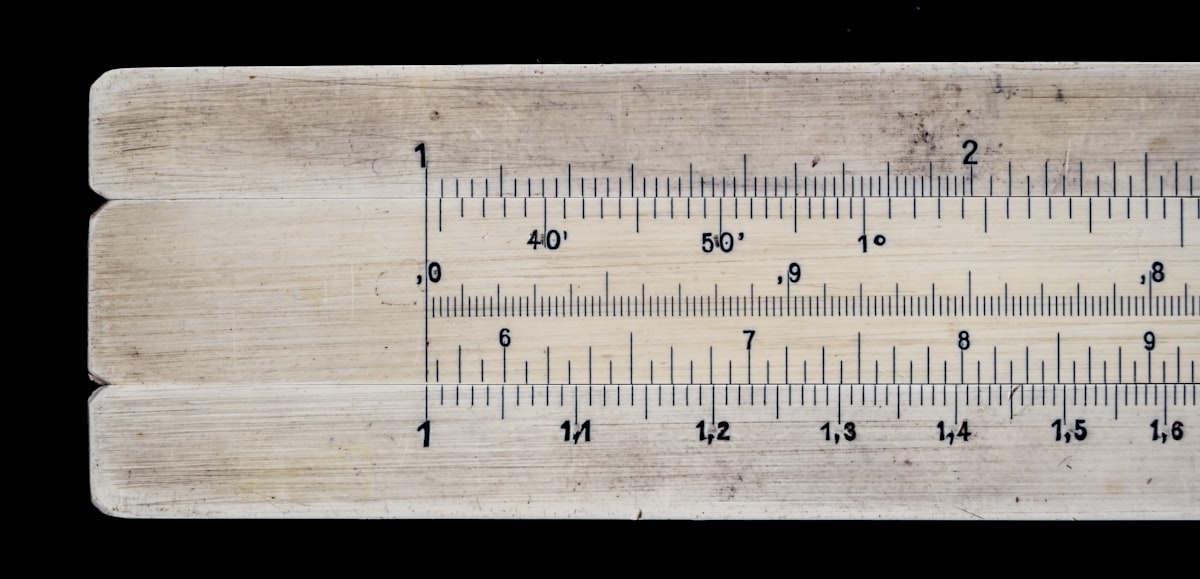
Kilometers and miles are both units of distance used daily around the world — on road signs, GPS devices, race bibs, and airline booking screens. The United States, United Kingdom (for road distances), Myanmar, and Liberia use miles. Almost everywhere else uses kilometers. Understanding both and converting between them fluently is a practical skill whether you are traveling, running a race, or shipping a package internationally.
The Origin of the Mile
The word 'mile' comes from the Latin mille passuum, meaning one thousand paces. A Roman pace was two steps — roughly 1.48 meters — making the Roman mile about 1,480 meters. The modern statute mile of 1,609.34 meters was standardized in England in 1593 under Queen Elizabeth I, based on eight furlongs of 220 yards each. The nautical mile, a different unit still in use today, is defined as one minute of arc along a meridian of the Earth — approximately 1,852 meters.
How the Kilometer Was Defined
The kilometer was born from the French Revolution's metrication project. In 1791, the French Academy of Sciences defined the meter as one ten-millionth of the distance from the North Pole to the equator along a meridian through Paris. The kilometer is simply 1,000 meters. The original measurement used surveying expeditions from Dunkirk to Barcelona to establish the meter's length. Today the meter is defined using the speed of light: one meter is the distance light travels in a vacuum in 1/299,792,458 of a second — making the kilometer exactly 1,000 such distances.
The Conversion Factor
One mile equals exactly 1.60934 kilometers. Going the other way, one kilometer equals 0.621371 miles. This relationship is fixed — the international yard and pound agreement of 1959 defined the yard as exactly 0.9144 meters, which makes the mile (1,760 yards) exactly 1,609.344 meters, or 1.609344 kilometers.
Common Reference Points
- 1 km = 0.62 miles
- 5 km = 3.1 miles (the most popular road race distance)
- 10 km = 6.2 miles
- Half marathon: 21.1 km = 13.1 miles
- Marathon: 42.195 km = 26.219 miles (commonly cited as 26.2 miles)
- 100 km = 62.1 miles
- 1 mile = 1.609 km
- 10 miles = 16.09 km
Quick Mental Conversion
To convert kilometers to miles in your head, multiply by 0.6 (or divide by 1.6). For miles to kilometers, multiply by 1.6. These shortcuts are within 3 percent of the precise answer — plenty accurate for driving or running. A useful trick: the Fibonacci sequence (1, 1, 2, 3, 5, 8, 13, 21...) gives approximate km-to-miles conversions, since each Fibonacci number is about 1.618 times the previous one, close to the 1.609 conversion factor.
Which Countries Use Which System?
The United States is the most prominent country still using miles for road distances. The UK uses miles for road signs and speed limits but officially adopted the metric system in many other contexts. Myanmar and Liberia are the only other countries that have not officially adopted the metric system. Most of the world — including all of continental Europe, Asia, Africa, and Latin America — uses kilometers for road distances. In international sporting contexts, races are standardized in kilometers.
Driving Abroad: Understanding Foreign Speed Limits
When renting a car in Europe, Australia, or most of Asia, the speedometer will show kilometers per hour. A limit sign reading 100 means 62 mph — freeway speed in the US. A 50 sign in a town means 31 mph. In the UK, speed limits are in mph: 30 mph in towns, 70 mph on motorways. Most modern GPS devices and smartphones can be switched between mph and km/h in settings, which is worth doing before you cross a border.
Speed: KPH vs MPH
The conversion factor is the same for speed as for distance. 100 km/h equals 62.1 mph. The typical European motorway cruise speed of 130 km/h equals 80.8 mph. The UK motorway limit of 70 mph equals 112.7 km/h. Formula 1 cars reach over 350 km/h (217 mph). Understanding these equivalences is useful both for driving abroad and for reading international automotive coverage.
The Nautical Mile and Aviation
Aviation and maritime navigation use the nautical mile, defined as exactly 1,852 meters (about 1.15 statute miles or 1.852 kilometers). Aircraft altitudes are measured in feet even in countries that otherwise use metric, a legacy of early aviation standards set by English-speaking nations. Aircraft speeds are measured in knots (nautical miles per hour). One knot equals 1.852 km/h or 1.151 mph. These conventions persist internationally because aviation and maritime safety depend on standardization, and changing them would require reprinting enormous amounts of charts, manuals, and instruments.
The marathon distance of 42.195 km (26.219 miles) was fixed in 1921 by the International Amateur Athletic Federation. Before that, marathon distances varied between races.
Running and Cycling: Why Both Units Coexist
In running, the 5K and 10K are universal race distances measured in kilometers. The mile is still used in track athletics and in some American road races. Professional cycling uses kilometers for race distances and speeds. In the US, many cycling computers default to miles, while European and professional cycling content uses kilometers. Garmin and other GPS watch manufacturers allow users to switch between both, and running apps like Strava let users choose their preferred unit globally.
GPS and Navigation: How Both Units Are Handled
GPS devices and smartphone navigation apps support both kilometers and miles with a simple settings toggle. The underlying GPS coordinates and calculations are unit-agnostic — distances are computed in meters internally, then converted to the user's chosen unit for display. This means the same satellite data serves both a driver in Kansas who wants miles and a driver in Germany who wants kilometers. Map scale bars on printed maps usually show both units for the same reason.
Unit Conversion Mistakes and Their Consequences
Confusion between miles and kilometers has caused real-world errors. In 1999, NASA lost the Mars Climate Orbiter because one engineering team used metric units and another used imperial — a difference that sent the spacecraft to the wrong trajectory. A Canadian Gimli Glider incident in 1983 saw a Boeing 767 run out of fuel mid-flight because ground crew measured fuel in pounds instead of kilograms. In medicine, drug dosing errors related to unit confusion are a documented safety risk. These cases underscore why unit literacy is not just an academic skill.
International Shipping and Distance Calculation
International shipping quotes and logistics systems typically use kilometers for routing calculations but may display distances in miles for US customers. Shipping weight is almost universally in kilograms for international freight. When calculating fuel costs for international road transport, drivers must be comfortable switching between liters per 100 km (the European standard) and miles per gallon (the US and UK standard). A car achieving 6 L/100km gets roughly 47 mpg (US) or 39 mpg (UK) — the UK gallon is larger than the US gallon, adding another layer of complexity.
Convert kilometers to miles instantly with our free distance converter →
Sources and further reading
Figures such as tax slabs, contribution limits and interest rates change over time. Always confirm the current values with the primary source before acting on them.