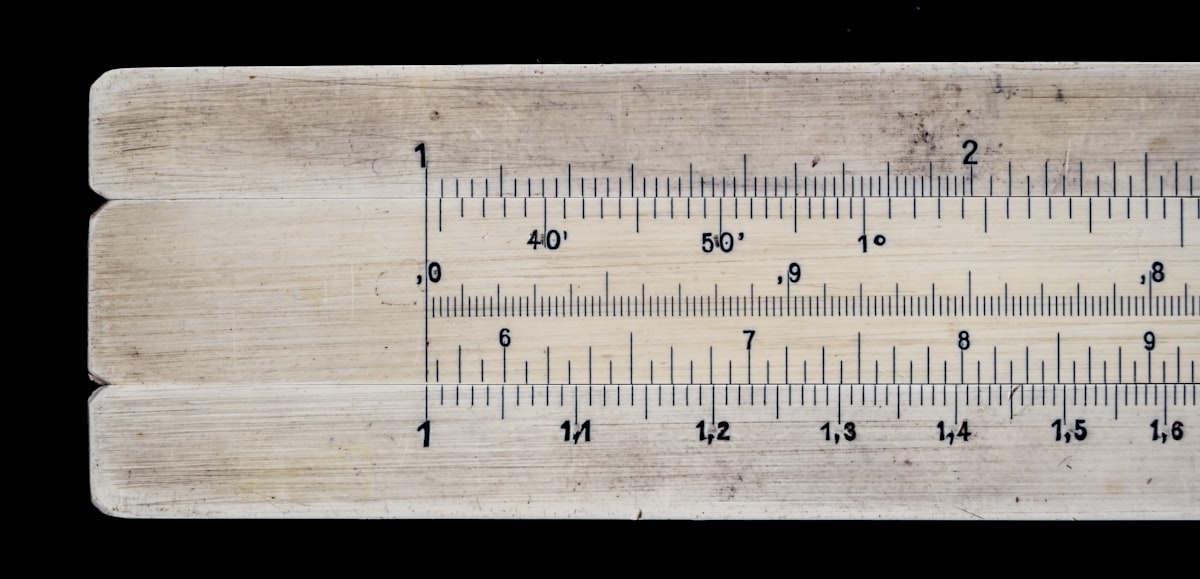
Why does most of the world measure in meters and kilograms, while the United States clings to feet and pounds? Why does the UK drive in miles but sell petrol in liters? The answer lies in two centuries of competing measurement standards, political decisions, scientific revolutions, and simple inertia. Understanding this history makes sense of a world where unit conversion is still a daily necessity.
Ancient Measurement: Before Standardization
Every ancient civilization developed its own measurement system. The Egyptian cubit — the distance from elbow to fingertip — dates to around 3000 BCE and was standardized using granite rods stored in temples. The Romans used the pes (foot, about 29.6 cm) and the mille passuum (1,000 double-paces, giving us the mile). Chinese dynasties had their own units, as did Indian and Mesopotamian civilizations. The defining feature of all these systems was local convention: a foot was literally someone's foot, and it varied from city to city, kingdom to kingdom.
The Imperial System: A Patchwork of History
The imperial system evolved over centuries in England from a collection of local and practical standards. A foot was literally the length of a human foot. A yard was reportedly the distance from King Henry I's nose to his outstretched thumb. An acre was the amount of land an ox could plough in a day. A pound was divided into shillings and pence by merchants who kept their own scales. These units were convenient and intuitive but wildly inconsistent — the exact length of a foot varied from town to town until the Weights and Measures Act of 1824 created a standardized British Imperial system.
The Problem That Demanded a Solution
By the 18th century, the inconsistency of local measurements was strangling trade across Europe. A pound of wool in one city weighed differently from a pound in another. A foot in Paris was different from a foot in London or Rome. Merchants needed to memorize dozens of local standards, and errors were common and costly. Scientists could not share data meaningfully across borders. The French Revolution provided both the political will and the intellectual framework to fix this.
The Metric Revolution: Born from the French Revolution
In 1791, the French National Assembly commissioned the French Academy of Sciences to design a rational measurement system. The result was the metric system: the meter, defined as one ten-millionth of the distance from the North Pole to the equator. The gram was the mass of one cubic centimeter of water at 4 degrees Celsius. Everything derived logically from these two base units. Napoleon spread the system across Europe through conquest, and by the 1870s it had been adopted by most of the world through the Treaty of the Metre (1875).
The Systeme International: The Modern Metric Standard
The modern metric system is formally called the Systeme International d'Unites, or SI. Established in 1960, it defines seven base units: the meter (length), kilogram (mass), second (time), ampere (electric current), kelvin (temperature), mole (amount of substance), and candela (luminous intensity). Since 2019, all seven base units are defined using fundamental physical constants, meaning they can be reproduced anywhere in the universe without reference to a physical artifact. SI is the official measurement system of 96 percent of the world's population.
Why the US Never Switched
The United States actually attempted metrication. In 1975, Congress passed the Metric Conversion Act, establishing a policy of voluntary conversion and creating a US Metric Board to coordinate the effort. But the voluntary nature of the act meant industry and consumers could simply choose not to change — and most did. Ronald Reagan disbanded the Metric Board in 1982, effectively ending the formal effort. The US remains one of only three countries (alongside Myanmar and Liberia) that has not officially adopted the metric system as its primary standard.
Countries That Never Adopted Metric
Myanmar (formerly Burma) uses a mix of traditional Burmese units and metric depending on context; metrication efforts have been ongoing but incomplete. Liberia uses US customary units as a legacy of its founding by American settlers. Both countries are officially committed to metrication but face significant practical barriers. By contrast, the UK — often perceived as imperial-loyal — legally adopted the metric system for most purposes; its use of miles and pints is technically a permitted exception, not the standard.
The NASA Mars Climate Orbiter Disaster
On September 23, 1999, NASA's Mars Climate Orbiter — a $327.6 million spacecraft — burned up in the Martian atmosphere because of a unit mismatch. One engineering team at Lockheed Martin used imperial units (pound-force seconds) to calculate thruster performance, while the navigation team at NASA's Jet Propulsion Laboratory used metric units (newton-seconds) in their software. The spacecraft was sent on the wrong trajectory as a result. It was one of the most expensive unit conversion errors in history and became a cautionary tale for the entire engineering profession.
The Mars Climate Orbiter failure: $327.6 million lost because one team used pounds and another used newtons. A thorough unit audit would have cost a fraction of one percent of that.
Metric in Medicine and Pharmaceuticals
Medicine is one area where metric has won decisively, even in the United States. Drug doses are prescribed in milligrams or micrograms. IV fluid volumes are in milliliters. Body temperature in clinical settings is increasingly reported in Celsius globally. Birth weights are recorded in grams. The reason is safety: metric's decimal structure makes drug calculations more straightforward and less prone to errors than a system based on grains, drams, and apothecary ounces. The Joint Commission, which accredits US hospitals, has pushed for metric-only medication labeling for decades.
Why Aviation Still Uses Feet for Altitude
Despite the global dominance of metric, aviation altitude is measured in feet worldwide — an anomaly rooted in the dominance of English-speaking nations in early aviation history. The first aircraft manufacturers and regulators were American and British, and their standards became global defaults. Changing to meters would require replacing or reprogramming altimeters, updating thousands of procedures, retraining pilots globally, and reissuing all aviation charts. The transition risk is judged greater than the cost of maintaining the existing standard.
The Metrication of Britain
Britain's metrication is largely complete but culturally incomplete. Road distances and speed limits remain in miles and mph — a legal exemption maintained largely for cost reasons (replacing road signs alone would cost hundreds of millions of pounds). Pints are still used for draught beer and cider in pubs. Body weight is still commonly discussed in stones and pounds. But food is sold by the gram and kilogram, medicine is dosed metrically, and science and engineering use SI exclusively. The UK is officially metric, but culturally bilingual.
The Future: Will the US Ever Go Metric?
The pragmatic case for US metrication is strong: it would simplify international trade, reduce unit-conversion errors in medicine and engineering, and align American students with global STEM standards. The barrier is not intellectual but political and economic: the cost of replacing infrastructure, the cultural attachment to familiar units, and the lack of a compelling short-term incentive for any individual actor to change. Younger Americans educated in STEM fields are more metric-fluent than previous generations. Whether this generational shift eventually tips the balance toward formal metrication remains an open question.
Convert between any metric and imperial units with our free conversion calculators →
Sources and further reading
Figures such as tax slabs, contribution limits and interest rates change over time. Always confirm the current values with the primary source before acting on them.