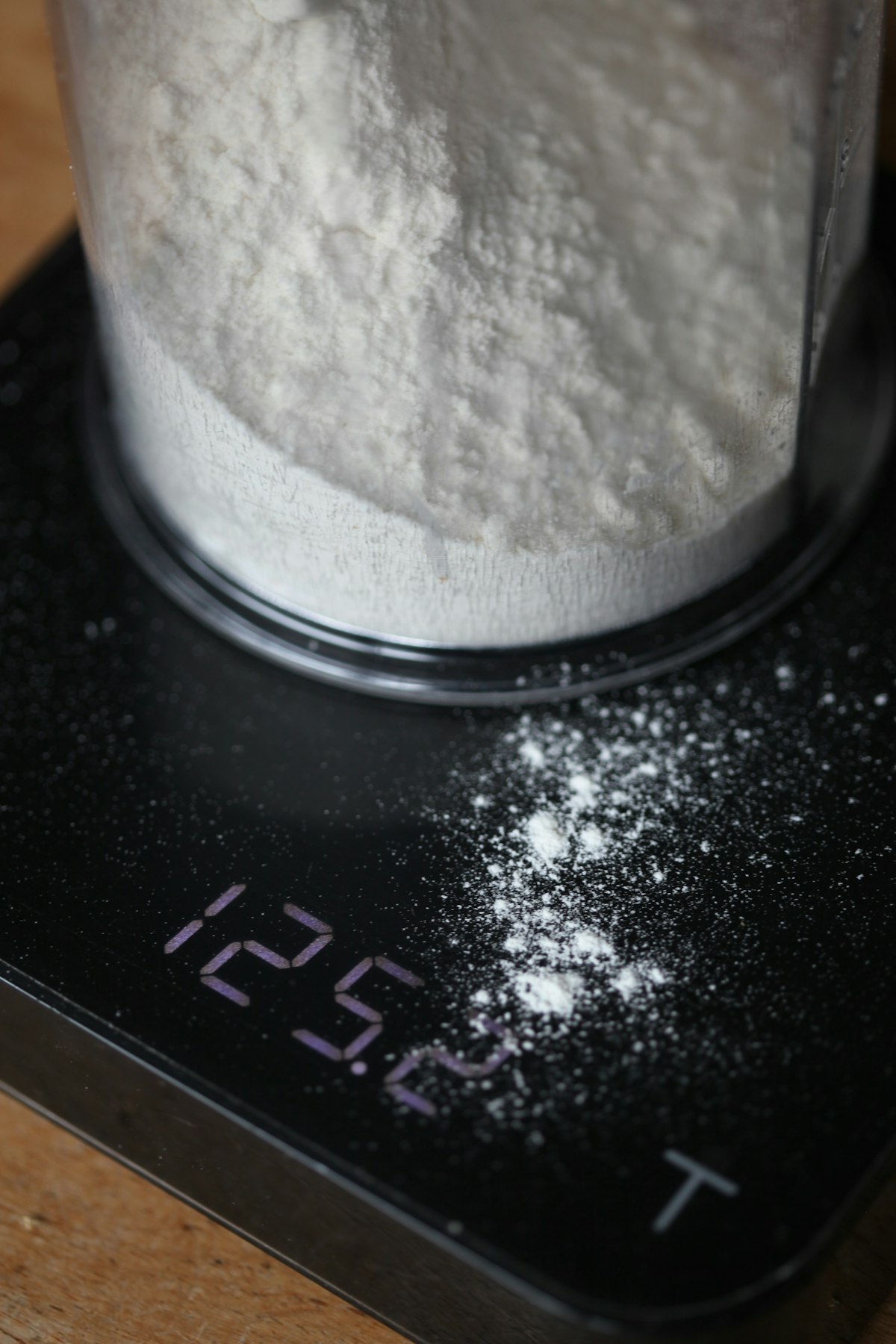

Grams and ounces both measure weight — but they come from different traditions. Professional kitchens and European recipes use grams; American recipes typically use ounces or cups. If you cook from both, you need this conversion constantly. Understanding the relationship between these two units will make you a more confident and precise cook or baker.
A Brief History of Weight in Cooking
For most of culinary history, cooks measured by feel, handful, and experience. Standardized weight measurements became important with the rise of professional cookbooks in the 18th and 19th centuries. The gram was introduced as part of the French metric system in 1795, while ounces trace back to ancient Rome's 'uncia,' one-twelfth of a pound. Today, the metric gram dominates professional cooking worldwide, while the avoirdupois ounce remains entrenched in American home kitchens.
Avoirdupois vs Troy Ounces
Not all ounces are the same. When a recipe calls for ounces of flour or sugar, it means avoirdupois ounces — the standard unit used in everyday commerce and cooking in the United States. One avoirdupois ounce equals 28.3495 grams. Troy ounces, by contrast, are used for precious metals like gold and silver and are slightly heavier at 31.1035 grams. Never use a troy-weight scale for cooking — it will give you incorrect measurements and ruin your recipes.
The Core Conversion Factor
1 ounce = 28.3495 grams. 1 gram = 0.03527 ounces. For quick mental math: 100 grams ≈ 3.5 oz; 250 grams ≈ 8.8 oz; 500 grams ≈ 17.6 oz (just over 1 lb). When precision matters, always use the exact factor rather than a rounded estimate — especially in baking where small discrepancies can affect the final product significantly.
Gram-to-Ounce Reference Table
- 10 g = 0.35 oz
- 25 g = 0.88 oz
- 50 g = 1.76 oz
- 75 g = 2.65 oz
- 100 g = 3.53 oz
- 125 g = 4.41 oz
- 150 g = 5.29 oz
- 200 g = 7.05 oz
- 250 g = 8.82 oz
- 300 g = 10.58 oz
- 400 g = 14.11 oz
- 500 g = 17.64 oz
Common Baking Ingredient Weights
- 1 cup all-purpose flour = ~120–130 grams = ~4.4 oz
- 1 cup bread flour = ~130 grams = ~4.6 oz
- 1 cup cake flour = ~100 grams = ~3.5 oz
- 1 cup granulated sugar = ~200 grams = ~7 oz
- 1 cup powdered sugar = ~120 grams = ~4.2 oz
- 1 cup packed brown sugar = ~220 grams = ~7.75 oz
- 1 cup butter = ~227 grams = 8 oz (2 sticks)
- 1 cup milk = ~245 grams = ~8.6 oz
- 1 cup honey = ~340 grams = ~12 oz
- 1 cup cocoa powder = ~85 grams = ~3 oz
- 1 cup rolled oats = ~90 grams = ~3.2 oz
- 1 large egg (whole) = ~50 grams = ~1.75 oz
- 1 tablespoon baking powder = ~14 grams = ~0.5 oz
- 1 teaspoon salt = ~6 grams = ~0.2 oz
Why Grams Are Better for Baking
Baking is chemistry. The ratio of flour to liquid to fat determines whether your cake rises, your bread has the right crumb, and your cookies spread correctly. Grams remove the ambiguity of volume measurements. A gram of flour is always a gram of flour, regardless of how lightly or firmly it's scooped. One cup of flour can vary by 20–30% depending on whether you scoop it directly, spoon it in, or sift it first — that variation can mean the difference between a tender crumb and a dense brick.
How Density Affects Volume-to-Weight Conversion
Different ingredients have very different densities, which is why volume measurements are unreliable. A cup of feather-light cake flour weighs roughly 100 grams, while a cup of dense almond flour weighs around 100–110 grams but packs very differently. Liquids like water and milk are approximately 1 gram per milliliter, making volume and weight nearly interchangeable for water-based ingredients. Fats like butter and oil are less dense than water, so a cup of oil weighs only about 216 grams despite occupying the same volume as 245 grams of water.
Professional vs Home Kitchen Measurement Practices
In professional kitchens, pastry chefs always weigh ingredients. Consistency is non-negotiable when producing hundreds of identical items per day. Home bakers, however, are often more accustomed to volume measurements and resist switching to a scale. The key difference is that a professional recipe scaled to produce 100 croissants must be exactly right every time, while a home baker can usually adjust on the fly. That said, home bakers who adopt weight measurements almost universally report better, more consistent results.
Invest in a digital kitchen scale — they cost under $15 and make every recipe more reliable, whether you're measuring in grams or ounces. Look for one with a 'tare' function so you can zero out the weight of your bowl between additions.
Buying a Kitchen Scale: What to Look For
- Capacity: at least 5 kg (11 lb) to handle large batches
- Precision: 1 gram increments for most baking; 0.1 gram for spices and yeast
- Tare function: essential for measuring multiple ingredients into the same bowl
- Dual units: can switch between grams and ounces with one button
- Flat surface: easier to clean and place mixing bowls on
- Auto-off delay: at least 3 minutes to prevent shutting off mid-recipe
Common Conversion Mistakes to Avoid
The most common mistake is confusing fluid ounces (a volume measurement) with weight ounces. A recipe might call for '4 oz of cream cheese' (weight) and '4 fl oz of milk' (volume) — these are different types of measurements despite using the same word. Another frequent error is assuming metric recipes from Europe and imperial recipes from the US refer to the same teaspoon or tablespoon sizes, when in fact Australian tablespoons are 20 ml versus the 15 ml standard in the US and UK.
Scaling Recipes by Weight
One of the greatest advantages of weight-based baking is how easy it is to scale recipes. If a cake recipe calls for 200 grams of flour and you want to make a half batch, you simply use 100 grams — no fractions of cups or awkward partial measurements. Scaling up is equally clean: doubling a bread recipe means doubling every gram, with no conversions needed. Many professional recipe cards are written as ratios by weight precisely for this reason.
Baker's Percentage Explained
Professional bakers use a system called 'baker's percentage' where every ingredient is expressed as a percentage of the total flour weight. Flour is always 100%. If a bread recipe uses 500 grams of flour, 325 grams of water, 10 grams of salt, and 5 grams of yeast, the percentages are: flour 100%, water 65%, salt 2%, yeast 1%. This system makes it instantly clear how hydrated a dough is, how it compares to other recipes, and how to adjust it for different textures. High-hydration doughs (75–80% water) produce open, airy crumbs; lower hydration (60–65%) produces denser, chewier breads.
International Recipe Weight Standards
While grams are universal in metric countries, be aware that some recipe traditions have quirks. French pastry recipes often express quantities in grams with very precise weights like 237 grams because they were originally calculated by ingredient ratio. British recipes sometimes still use pounds and ounces alongside metric. Australian and New Zealand recipes use metric grams but their tablespoon is 20 ml rather than 15 ml. When following an international recipe, check the origin and confirm the measurement conventions before you start.