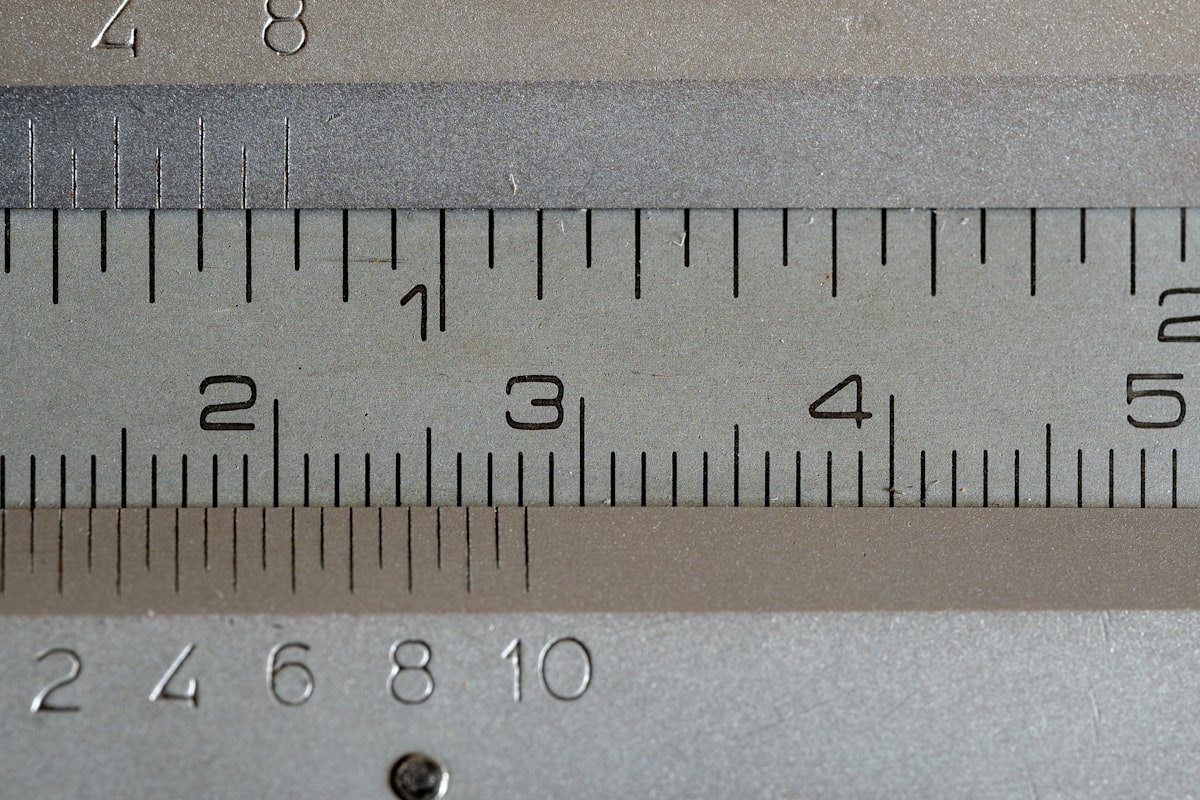

The metric system is used by about 95% of the world's population. It's logical, consistent, and built around powers of 10 — which makes conversions within the system trivially easy compared to imperial units. Whether you grew up with miles and pounds or are encountering metric for the first time, understanding this system will make science, travel, cooking, and everyday calculations far more intuitive.
The Origins of the Metric System
The metric system was born during the French Revolution. In 1790, the French National Assembly commissioned scientists to create a universal, rational measurement system to replace the chaotic patchwork of local units that varied from town to town across Europe. By 1795, the foundational units — the meter and the gram — were legally adopted in France. The system spread globally as French influence expanded, and scientific communities worldwide adopted it for its unmatched logical consistency. By the mid-20th century, most nations had officially converted, leaving the United States, Myanmar, and Liberia as the last holdouts for everyday imperial usage.
The Core Idea: Powers of Ten
Every metric unit is related to the base unit by a factor of 10, 100, 1,000, etc. This is the system's greatest strength. Converting 1.5 kilometers to meters? Multiply by 1,000: 1,500 meters. Converting 1,500 grams to kilograms? Divide by 1,000: 1.5 kg. No memorizing 5,280 feet per mile or 16 ounces per pound. The logic is completely consistent across all types of measurement — length, mass, volume, and more.
The Seven SI Base Units
The International System of Units (SI) — the modern form of the metric system — defines seven base units from which all other units are derived. These were chosen because they cover all fundamental physical quantities and are precisely defined using natural constants.
- Meter (m) — length
- Kilogram (kg) — mass
- Second (s) — time
- Ampere (A) — electric current
- Kelvin (K) — thermodynamic temperature
- Mole (mol) — amount of substance
- Candela (cd) — luminous intensity
Common Prefixes: From Kilo to Milli
- kilo (k) = 1,000 × — 1 kilometer = 1,000 meters
- hecto (h) = 100 × — 1 hectoliter = 100 liters
- deca (da) = 10 × — 1 decagram = 10 grams
- deci (d) = 0.1 × — 1 decimeter = 0.1 meters
- centi (c) = 0.01 × — 1 centimeter = 0.01 meters
- milli (m) = 0.001 × — 1 milliliter = 0.001 liters
Large Prefixes: Mega, Giga, Tera
As technology expanded into computing and telecommunications, larger metric prefixes became essential everyday terms. A megabyte is one million bytes, a gigabyte is one billion bytes, and a terabyte is one trillion bytes. In physical science, a megawatt is one million watts of electrical power, and a gigaton is one billion metric tons — the unit used to measure global carbon emissions. These large prefixes follow the same powers-of-ten logic: mega = 10⁶, giga = 10⁹, tera = 10¹², peta = 10¹⁵.
Small Prefixes: Micro, Nano, Pico
At the other extreme, metric prefixes describe incredibly small quantities used in medicine, biology, and nanotechnology. A microgram (μg) is one-millionth of a gram — the unit used for vitamin dosages and drug concentrations. A nanometer (nm) is one-billionth of a meter — the scale at which computer chips are manufactured and DNA is measured. A picogram is one-trillionth of a gram — relevant in biochemistry and forensic science. Micro = 10⁻⁶, nano = 10⁻⁹, pico = 10⁻¹².
The Base Units You Need for Everyday Life
- Length: meter (m) — about 3.28 feet; a doorway is about 2 meters tall
- Mass: kilogram (kg) — about 2.2 pounds; a bag of sugar is 1 kg
- Volume: liter (L) — about 1.06 US quarts; a standard water bottle is 500 mL
- Temperature: Celsius (°C) — 0 is freezing, 20 is room temperature, 37 is body temperature, 100 is boiling
- Time: second (s) — identical to imperial; minutes and hours work the same
How Each Base Unit Is Defined Today
Modern SI units are defined using fundamental constants of nature rather than physical objects, making them perfectly reproducible anywhere in the universe. The meter is defined by the speed of light: it is the distance light travels in a vacuum in 1/299,792,458 of a second. The kilogram was redefined in 2019 using Planck's constant, replacing the physical platinum-iridium cylinder that had served as the reference for 130 years. The second is defined by the vibrations of cesium-133 atoms. These definitions ensure that measurement standards are stable, universal, and accessible to any laboratory with the right equipment.
Practical Everyday Metric in the United States
Even in the US, metric is everywhere once you know where to look. Nutrition labels list grams and milligrams. Wine and spirits are sold in 750 mL bottles. Soda comes in 2-liter bottles. Automotive engines are measured in liters. Medicines are dosed in milligrams and micrograms. Film and photography sensors are measured in millimeters. Road signs in the US are the main holdout — but any American who has traveled abroad or worked in science, medicine, engineering, or military contexts already uses metric daily.
Science and Medicine: Why Metric Is Non-Negotiable
Scientific research worldwide is conducted and published exclusively in SI units. Medical dosing uses milligrams and micrograms because the differences matter — a dosing error in imperial units can be life-threatening. The famous 1999 Mars Climate Orbiter crash was caused by one engineering team using imperial units while another used metric — a $327 million loss. In medicine, switching between unit systems is a known source of medication errors. Metric precision and universality are not preferences in these fields; they are requirements.
Metric in International Travel and Commerce
When traveling to almost any country outside the US, you'll encounter metric immediately. Road signs show kilometers, weather forecasts use Celsius, grocery stores sell by the kilogram, and fuel is sold per liter. Knowing that 100 km/h is about 62 mph, that 30°C is a warm summer day (86°F), and that one kilogram is roughly 2.2 pounds gives you functional fluency for travel. For international trade and manufacturing, metric is the standard — most US companies that export use metric internally to interface with global suppliers and customers.
Metric Conversions Quick Reference
- 1 inch = 2.54 cm | 1 foot = 30.48 cm | 1 mile = 1.609 km
- 1 pound = 453.6 g | 1 ounce = 28.35 g | 1 stone = 6.35 kg
- 1 US gallon = 3.785 L | 1 fl oz = 29.57 mL | 1 pint = 473 mL
- °F to °C: subtract 32, multiply by 5/9
- °C to °F: multiply by 9/5, add 32
- 1 mph = 1.609 km/h | 60 mph = 96.56 km/h
Fun Facts About the Metric System
The word 'meter' comes from the Greek 'metron,' meaning measure. The original definition of the meter was one ten-millionth of the distance from the equator to the North Pole along a meridian through Paris. The metric system was briefly introduced in the UK in the 1970s, and road signs are still in miles — making the UK one of the few countries that officially uses metric but still posts distances in imperial. NASA uses metric for all spacecraft systems since the Mars Orbiter incident, but some older programs still have legacy imperial components that require careful conversion.
The fastest way to become comfortable with metric is to stop converting and start thinking in metric directly. Estimate your own weight in kilograms, think of room temperature as 20°C, and measure your height in centimeters. Within a few weeks, the numbers will feel natural.