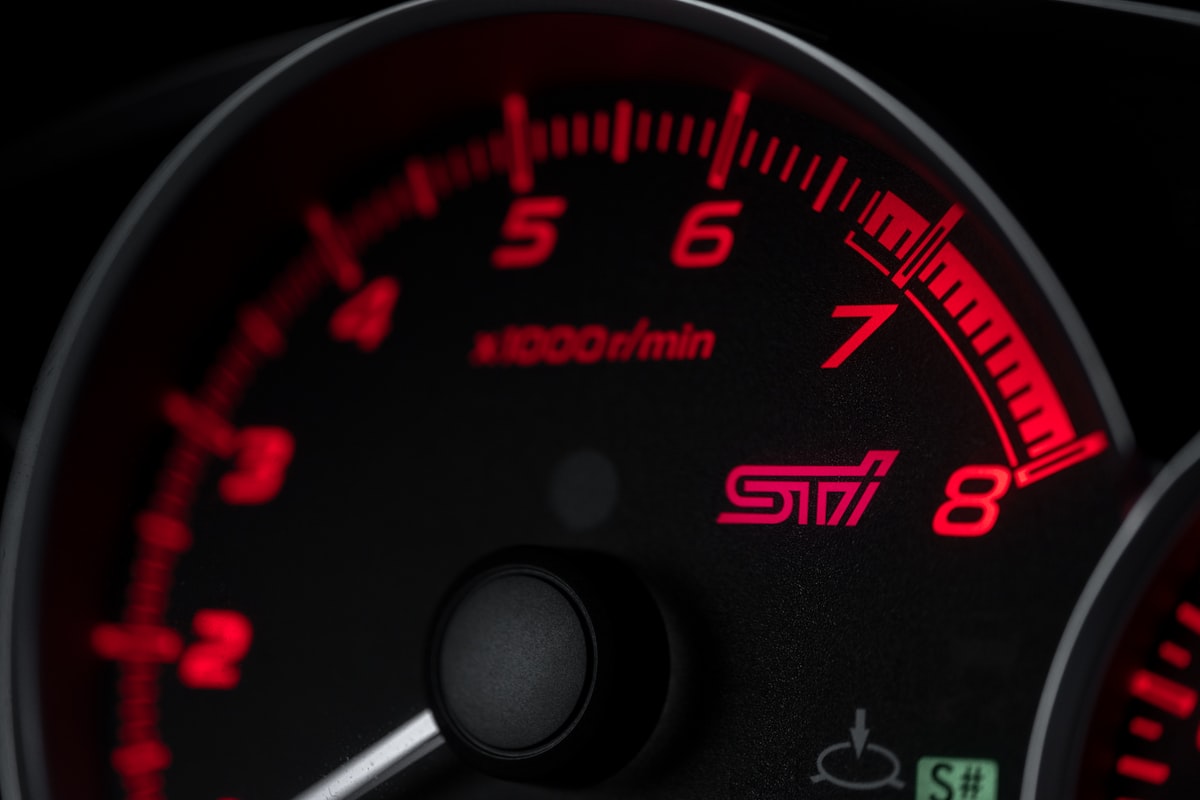

Speed is measured in miles per hour (mph) in the US and UK, and kilometers per hour (km/h or kph) almost everywhere else. Whether you are renting a car abroad, reading news from another country, or importing a vehicle, knowing how to convert between them is practically useful — and understanding the history behind the two systems makes the differences far less confusing.
A Brief History of Speed Measurement
Before the 20th century, the concept of speed limits did not exist. The first recorded motor vehicle speed limit was 4 mph in the UK Locomotive Acts of 1865 — a regulation requiring a person to walk in front of any self-propelled vehicle carrying a red flag. France introduced the first true road speed limit of 12 km/h in 1893. The first radar gun for measuring vehicle speed was tested in the United States in 1954. Today, radar, laser (LIDAR), and average-speed camera systems are all calibrated to detect vehicles exceeding posted limits in either mph or km/h depending on the country.
The Conversion Factor
1 mph = 1.60934 km/h, because one mile is defined as exactly 1,609.344 meters. 1 km/h = 0.62137 mph. To convert mph to km/h, multiply by 1.609. To convert km/h to mph, multiply by 0.621. A useful rough approximation: mph times 1.6 gives km/h, and km/h divided by 1.6 gives mph. For quick mental conversion, think of mph as roughly 60% of the km/h value.
How Speedometers Work
Older analog speedometers used a cable connected to the vehicle's transmission, which spun a magnet inside a metal cup, inducing a drag proportional to rotational speed. Modern electronic speedometers read pulses from a sensor on the wheel hub or transmission output shaft, counting pulses per unit time to calculate speed. GPS-based speed display in modern vehicles measures changes in satellite-derived position over time. Electronic speedometers are typically accurate to within 1-2%, while GPS readings can be accurate to within 0.5 km/h under good conditions.
Why the UK Uses mph
The UK is one of only three countries in the world (with the US and Liberia) that officially uses mph for road speeds. This reflects historical path dependence rather than any practical superiority of the imperial unit. When continental Europe adopted the metric system in the 19th and early 20th centuries, Britain was not participating in those harmonization efforts. By the time metrication became politically feasible in the UK, road signs, vehicles, and driver culture were so entrenched in mph that the cost of conversion was deemed too high. A formal review in the early 2000s concluded that conversion would cost hundreds of millions of pounds for minimal practical benefit.
Dual-Scale Speedometers in Exported Cars
Vehicles sold in multiple markets often carry dual-scale speedometers showing both mph and km/h. The larger, more prominent scale typically reflects the primary market. In a car sold primarily in the US, mph appears on the outer ring and km/h on an inner ring. In Europe, km/h is dominant. Digital instrument clusters in modern vehicles can be configured by the driver or dealer to display either unit, eliminating the compromise of dual-scale dials. Some jurisdictions legally require the primary display to match the national speed unit.
Speed Limits Around the World
- United States: residential 25 mph (40 km/h), interstate highway 65-85 mph (105-137 km/h) depending on state
- United Kingdom: residential 30 mph (48 km/h), motorway 70 mph (113 km/h)
- European Union: urban 50 km/h (31 mph), motorway typically 120-130 km/h (75-81 mph)
- Germany Autobahn: no general limit on about 70% of network, advisory speed of 130 km/h (81 mph)
- Australia: urban 50 km/h (31 mph), freeway 100-110 km/h (62-68 mph)
- Japan: expressway 100 km/h (62 mph), urban 60 km/h (37 mph)
Speed and Stopping Distance
One of the most critical relationships in road safety is the non-linear link between speed and stopping distance. Stopping distance has two components: reaction distance (the distance covered before the driver applies the brakes) and braking distance (the distance to stop after braking begins). Braking distance increases with the square of speed. Doubling your speed quadruples your braking distance. At 30 mph (48 km/h), the stopping distance is approximately 23 meters. At 60 mph (96 km/h), it is approximately 73 meters — more than three times as far. At 70 mph (113 km/h), it reaches roughly 96 meters.
Common Speed Limits Compared
- 20 mph = 32 km/h (school zones and pedestrian areas)
- 30 mph = 48 km/h (typical residential limit in the UK and US)
- 60 mph = 97 km/h (US rural road or UK single carriageway limit)
- 70 mph = 113 km/h (UK motorway maximum)
- 100 km/h = 62 mph (common motorway limit in continental Europe and Australia)
- 130 km/h = 81 mph (French autoroute and German advisory speed)
Speed in Sports
- Usain Bolt's peak sprint speed: 44.7 km/h = 27.8 mph (100m world record run)
- Average marathon pace for a 3:30 finish: approximately 12 km/h = 7.5 mph
- Recreational cycling: 20-25 km/h = 12-16 mph; Tour de France average stage: ~40 km/h = 25 mph
- Professional tennis serve: up to 263 km/h = 163 mph (record by Sam Groth)
- Baseball pitch: 150 km/h = 93 mph is considered a good fastball
- Formula 1 top speed in race conditions: approximately 360-375 km/h = 224-233 mph
Wind Speed: Beaufort Scale and Knots
Wind speed is measured in several units. Meteorologists and sailors use knots (nautical miles per hour), where 1 knot equals 1.852 km/h or 1.151 mph. The Beaufort scale, developed by British admiral Francis Beaufort in 1805, rates wind from 0 (calm) to 12 (hurricane force) based on observable effects. A Beaufort 6 strong breeze is roughly 25-31 mph (40-50 km/h). A Beaufort 12 hurricane has winds exceeding 64 knots (74 mph or 119 km/h). Aviation uses knots for both wind and airspeed.
The Speed of Sound and Mach Numbers
The speed of sound in air at sea level and 20 degrees Celsius is approximately 343 m/s, or about 1,235 km/h (767 mph). Mach 1 is defined as the speed of sound under local conditions — it varies with altitude and temperature. Commercial aircraft cruise at around Mach 0.85. Concorde flew at Mach 2. Military aircraft routinely fly at Mach 2-3. The fastest crewed aircraft ever flown, the SR-71 Blackbird, reached Mach 3.3 — approximately 3,540 km/h (2,200 mph). The Space Shuttle reentered the atmosphere at roughly Mach 25.
For quick mental conversions: mph to km/h — multiply by 1.6 (or by 8 then divide by 5). km/h to mph — multiply by 0.6 (or by 5 then divide by 8). At highway speeds, 100 km/h is approximately 62 mph — a useful anchor point.